

Eid al-Adha is one of the most profound celebrations in the world, rooted in sacrifice, shaped by faith, and lived through powerful traditions.
In the UAE, the festival settles in quietly through familiar routines. It begins with alarms set before sunrise, soft conversations at home, and a meaning beyond the ordinary.
Eid lives in the quiet acts of sacrifice, kindness, and care we choose each day. In their own way, the smallest moments start to feel fuller, warmer, and more alive.
Why is Eid al-Adha called the Festival of Sacrifice?
To understand why Eid al-Adha, the festival of sacrifice, holds such importance, you have to go back to its origin.
The story speaks of Prophet Ibrahim (peace be upon him) and his willingness to sacrifice what he loved most, purely out of faith and obedience to God. The intention remained the most powerful part of it all.
And at its core, this is exactly why Eid al-Adha is celebrated even today in 2026: the trust, devotion, and the ability to put something greater above personal attachment.
While the meaning of Eid al-Adha is simplified as sacrifice, it is much deeper than that. It is about letting go, showing gratitude, and recognizing that not everything we hold on to defines us.
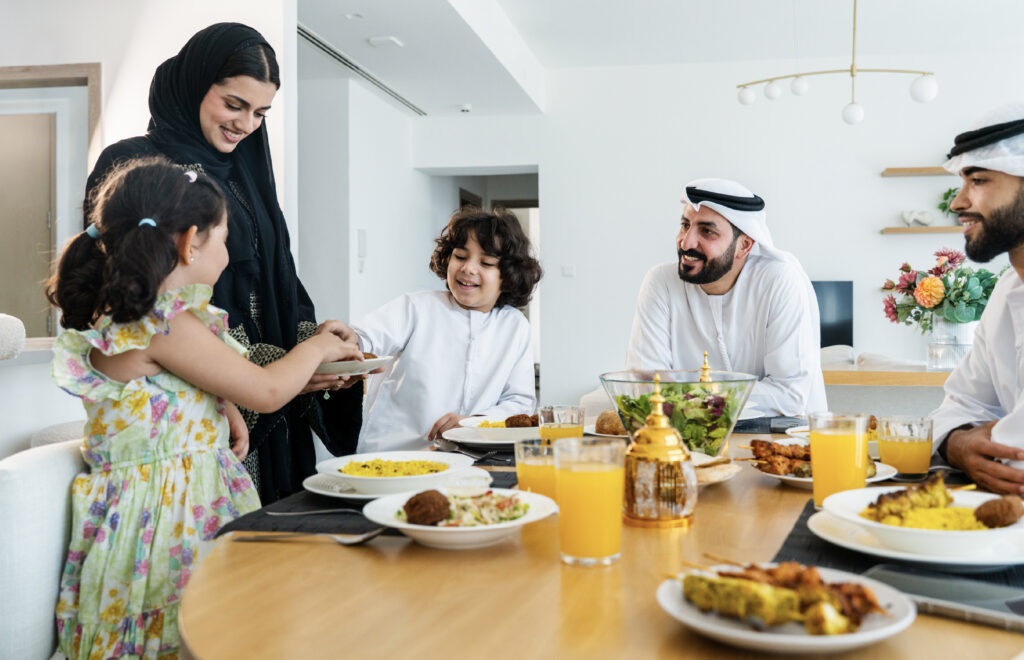
This religious tradition involves the sacrifice of an animal in the name of God and the distribution of its meat among family, friends, and those in need. It inculcates the value of giving and sharing.
This significance becomes even more relevant in modern life. When everything moves so quickly and everyone is on their own, the festival creates a pause. It gives people a reason to slow down, reflect, reconnect, and extend a hand for giving.
Eid al-Adha History and Its Relevance Today
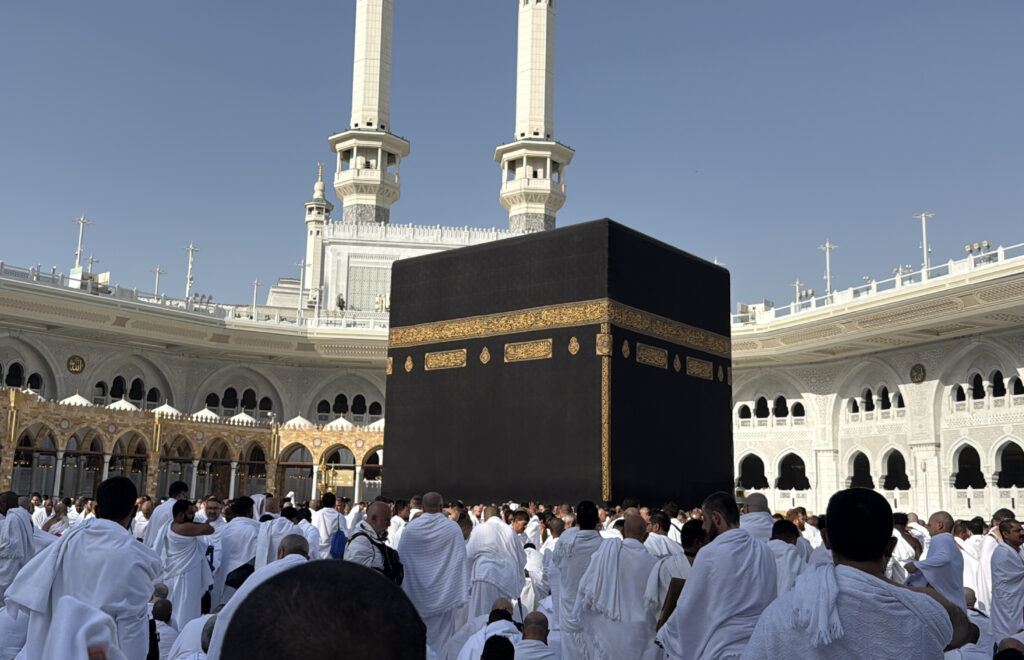
The history of Eid al-Adha continues to shape how people approach the present.
Across the UAE, the essence of the festival is visible in how people prepare, gather, and give.
The first ten days of Dhul Hijjah, the final month of the Islamic lunar calendar, are considered spiritually significant.
From 18th to 27th May 2026 on the Georgian Calendar, each day builds intention, reflection, and devotion, leading up to the Day of Arafah, the ninth day, which marks the peak of this sacred time before Eid al-Adha.
By the time Eid arrives on the 10th of Dhul Hijjah, it carries the weight of these ten days of faith, patience, and quiet preparation.
In Fujairah, the quieter surroundings make the Eid experience feel more reflective. There is a strong sense of community in RAK, where traditions feel closer and more familiar. Even though the scale of celebration is quite grand in Dubai, the emotions remain just as real and rooted.
The beauty of Eid al-Adha (also spelled Eid ul Adha or Eid Al Adha) is that it adapts to every environment while still holding on to its core values.
Whether it is a large congregation or a small family gathering, the meaning does not change.
Prayer Timings for Eid Al-Adha 2026 and What to Expect
One of the most important parts of the day is the prayer. Planning Eid al Adha 2026 prayer time in advance ensures the day begins with intention.
Eid prayers are usually 15 to 20 minutes after sunrise, though they may vary slightly depending on your location. The tentative Eid al-Adha 2026 prayer timings are below.
| City | Time |
| Dubai | 5:52 a.m. |
| Fujairah | 5:48 a.m. |
| Ras Al Khaimah | 5:48 a.m. |
| Abu Dhabi | 5:57 a.m. |
| Sharjah | 5:51 a.m. |
| Al Ain | 5:51 a.m. |
| Ajman | 5:51 a.m. |
These early hours carry a unique calm. The roads are quieter, the air feels lighter, and there is a shared sense of purpose among everyone heading out.
It is also one of those moments where convenience matters more than you realize.
Getting to the mosque on time, especially when coordinating with family, can set the tone for the entire day.
This is where a Hala Taxi becomes the perfect companion for your Eid. We’ll make sure you arrive without any stress, delay, or parking queues, so you can focus on what truly matters.
Understanding the Eid al-Adha Prayer Procedure
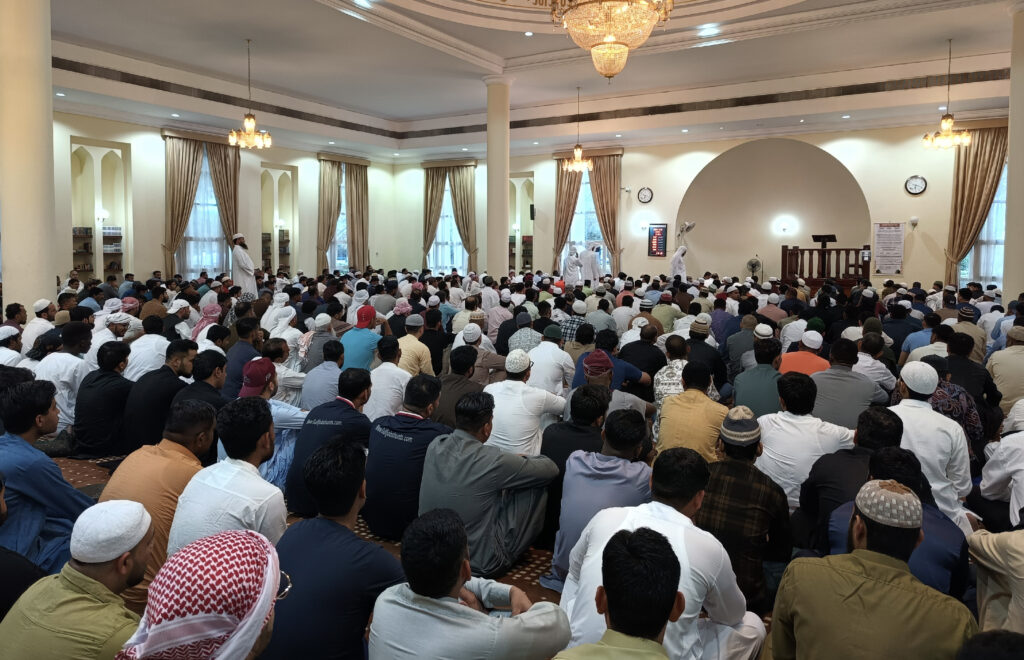
The Eid Salaah (prayer) is a beautiful moment to reconnect with your soul and come together in devotion to the Almighty. And knowing the Eid al-Adha prayer procedure helps you stay present.
The Eid al-Adha namaz (prayer) begins with making the intention to perform the prayer. This is followed by the first rak’ah (unit) of prayer, where 6 additional takbeers are recited before Surah Al-Fatiha.
In the second rak’ah (unit), 5 more takbeers are performed before the recitation of Surah Al-Fatiha. After the prayer, the Imam delivers a sermon reflecting on the festival’s values, the history of Eid ul-Adha, and its relevance today.
The structure is simple, but the experience is powerful.
Standing among others, hearing the same recitations, and sharing that moment of unity creates something that stays with you long after the prayer ends.
Eid Mubarak, From Hala to You!
The beauty of Eid al-Adha lies in its simplicity. It is not about doing more but feeling more.
It is about understanding the significance of Eid al-Adha in your own way and carrying forward the lessons from the story into everyday life.
From the early morning prayer to the quiet moments at home, every part of the day matters.
And as the day winds down, after the prayers, the journeys, the laughter, and the quiet reflections, what truly stays with you is the feeling of having paused, enjoying connections, and giving.
That is the heart of Eid al-Adha. The early morning rush, the shared rides, the familiar faces, and the warmth of being exactly where you need to be.
Because in the end, Eid with your loved ones is everything. And more so, with Hala.
Eid Al-Adha Mubarak from all of us at Hala. May your Eid be filled with peace, purpose, and moments that stay with you long after.